The forced-labor Section 301 action is final. Here is what changed for Vietnam.
USTR's final notice places most non-exempt Vietnam-origin goods in a 12.5% additional-duty group for qualifying entries from July 24. That conclusion, its exceptions, and the still-open investigations need to stay separate.
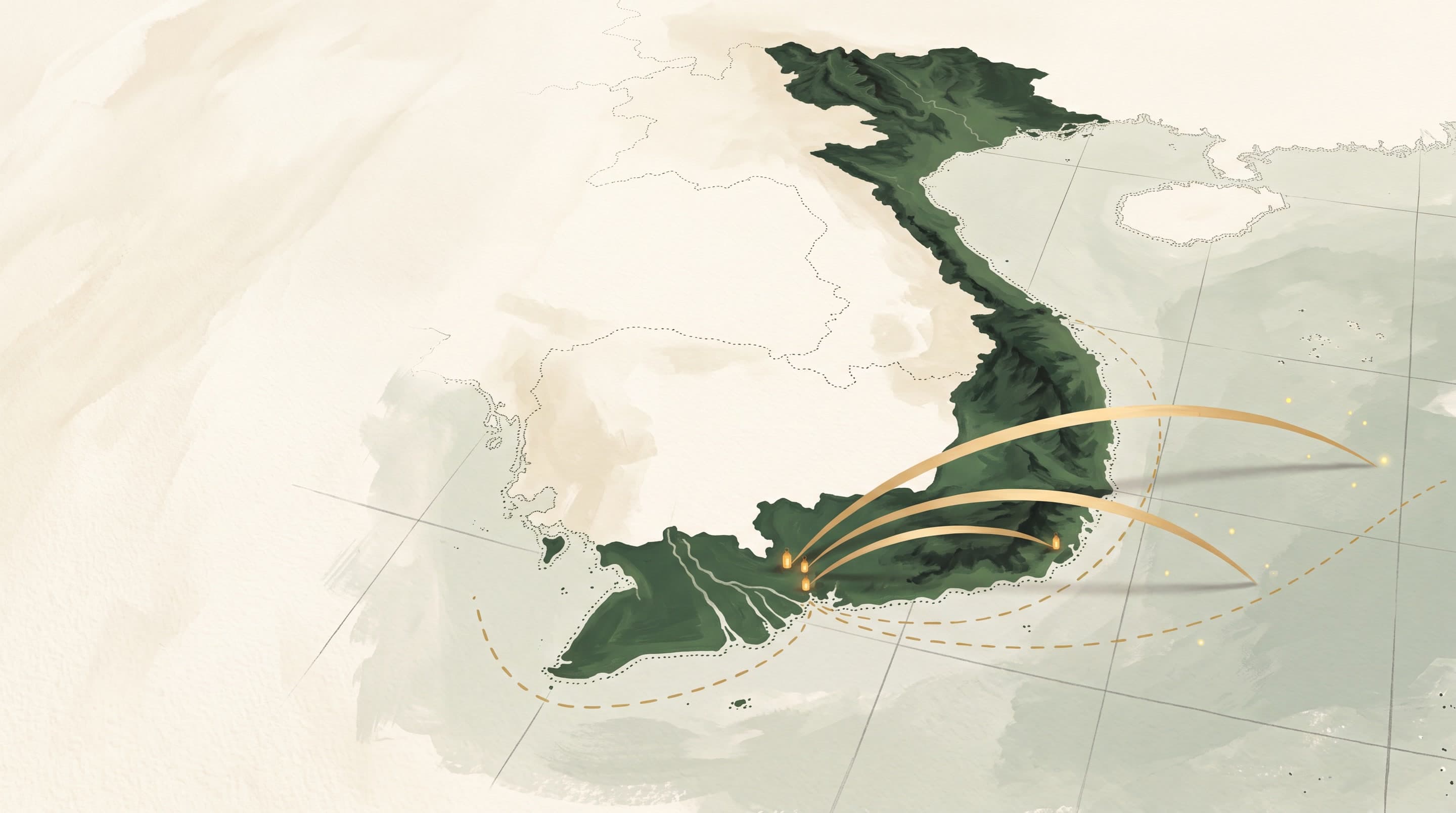 Policy tells you the rule. Product classification and attributable origin evidence tell you how it applies.
What USTR actually changed
On July 23, USTR published final action after its forced-labor Section 301 investigation of 60 economies. The notice defines several rate groups. Vietnam is investigated and appears in none of the named 10% or net-of-MFN groups, so it falls in the “all other” full-12.5% group.
This is an additional ad valorem duty under Section 301. It is not a revival of the 20% reciprocal tariff or 40% transshipment penalty announced under IEEPA in 2025. The Supreme Court held on February 20, 2026 that IEEPA does not authorize the President to impose tariffs.
The entry date matters
The additional duty applies to covered goods entered for consumption, or withdrawn from warehouse for consumption, at or after 12:01 a.m. Eastern on July 24, 2026.
The notice gives a narrow transit exception for goods loaded onto a vessel at the port of loading and in transit on the final mode of transit before that moment, if they are entered before 12:01 a.m. Eastern on July 28. Arrival date alone is not enough; confirm the entry facts with the broker handling the shipment.
The 12.5% rate is not a blanket answer for every product
The final notice exempts products listed in its annexes. A buyer still needs the exact HTS classification, the product's country-of-origin analysis, and an annex check before using the rate in landed-cost planning.
For textiles and apparel, the notice directs USTR to establish alternative tariff-rate quotas, when feasible, for Bangladesh, Cambodia, Indonesia, and Malaysia. It does not name Vietnam for that prospective treatment. Buyers should not assume those quotas already exist or extend to Vietnam; verify the exact line and any later implementation notice.
Three Section 301 dockets should not be blended together
Vietnam now appears in three distinct Section 301 matters with different scopes and statuses:
- Forced-labor policies: final action published July 23, with duties effective July 24.
- Structural excess capacity and production: investigation initiated March 11 and still open at this review date.
- Vietnam intellectual-property practices: investigation initiated May 29 and still open at this review date.
A practical buyer check for the next shipment
- Ask your customs broker or trade counsel to confirm the HTS line, applicable annex exemption, entry date, and any transit exception. Keep their conclusion tied to the shipment.
- Recalculate landed cost using the reviewed treatment, not a headline rate or an old IEEPA rate.
- Retain attributable evidence for the claimed country of origin: inputs, production steps, C/O history, shipment records, and the people and dates behind each fact.
- Recheck the open USTR dockets before a long-dated quote or reorder. A July 24 review is evidence of what was known then, not permanent freshness.
Limits of this Monitor note
This is an evidence-based reading of the cited official materials, not legal advice, a customs ruling, or a guarantee of classification, origin, duty treatment, or clearance. Product facts can change the result. A qualified broker or counsel should approve a shipment-specific conclusion.
Official sources
We used the official materials below and reviewed them on July 24, 2026. The rate conclusion for Vietnam is an explicit inference from the final notice's investigated-economy and rate-group lists.
- USTR final action notice and annexes — July 23, 2026 (PDF)
- USTR fact sheet on the forced-labor Section 301 action — July 23, 2026
- USTR initiation of structural excess-capacity investigations — March 11, 2026
- USTR initiation of the Vietnam intellectual-property investigation — May 29, 2026
- White House Section 122 proclamation and stated July 24 end time — February 20, 2026
- Supreme Court opinion holding that IEEPA does not authorize presidential tariffs — February 20, 2026 (PDF)